
Why We’re Finally Building Digital Homes We Actually Own
The Hook: The Exhaustion of Renting Our Attention
Nobody wakes up on a Tuesday morning and excitedly says, “I can’t wait to feed the algorithm three carousel slides today just so twelve people can see them.”
Yet, for the better part of the last decade, that was the unspoken social contract we all signed. We built our audiences on rented land. We poured our best thoughts into LinkedIn feeds, crafted visual portfolios on Instagram, and set up boutique storefronts inside marketplaces that changed their fee structures or suppression rules on a whim. It took me four consecutive platform redesigns and one unprompted reach drop to finally understand the quiet dread: we don’t own any of it.
When you operate entirely within someone else’s walled garden, you aren’t a creator or an independent business owner—you’re an unpaid tenant performing chores for a landlord who never answers the phone. Building a self-hosted website used to feel like an archaic, 2005-era errand—something you did with dial-up internet and raw HTML editors. Today, it feels like the single most radical, grounding act of creative survival: building a permanent digital home that no algorithm can ever evict you from.
The Frustration Isn’t Code—It’s Friction
The reason most writers, consultants, and makers put off building a real site isn’t a lack of desire. It’s the invisible wall of technical dread. The internet has a way of turning simple things into bloated chores. You start researching how to start a website, and within ten minutes you’re drowning in forum threads about DNS record propagation, PHP memory limits, SSL handshakes, and whether you need to hire a freelance developer for $3,000 just to set up a clean landing page.
When I finally decided to leave the rented platforms behind, I wrote down three non-negotiable rules for what actually matters when launching a personal space online:
- Zero Maintenance Drag: If keeping the site alive requires me to become an amateur sysadmin, I will abandon it within three months. The backend must be virtually invisible.
- Frictionless Velocity: The time between paying for a domain and staring at a live, clean WordPress dashboard should be measured in minutes, not weekend-long troubleshooting marathons.
- Total Asset Ownership: The subscriber list, the design files, the written archives, and the raw URL must belong strictly to me—exportable, transferable, and immune to third-party policy whims.
Why Bluehost Ended Up Running My Site
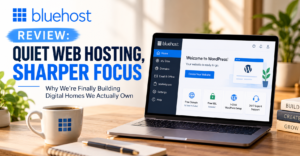
I didn’t pick Bluehost because of corporate benchmark charts or server architecture whitepapers. I picked it because I wanted the technical barrier between my idea and the live internet reduced to zero. When you sign up, there is no manual database linking. No opening a terminal window. You pick your domain—which comes included for free for the first year—and check out. The platform asks you a few basic questions about what you’re making (a blog, an editorial portfolio, an independent studio shop), and then it provisions a fresh WordPress installation automatically in the background.
The moment that stays with you is surprisingly tactile: typing your custom .com into a private browser tab for the first time and seeing that little padlock icon in the address bar, fully encrypted, completely live, running on your own terms. Bluehost handled the automatic SSL configuration without me clicking a single extra toggle. When an automatic plugin update needs to happen, it happens quietly in the middle of the night. It provides that rarest of modern tech luxuries: it works, and then it gets out of your way.
What This Says About Us Right Now
We are living through a subtle, collective pivot toward permanence. We spent ten years rushing toward whatever new platform promised viral discovery, only to realize that virality is an unstable foundation for serious work. The creators, founders, and writers I admire most aren’t competing for fleeting attention in a crowded feed anymore; they are creating focused, beautiful digital archives that people seek out on purpose.
A self-hosted website is a boundary. It tells your readers—and more importantly, yourself—that what you are building is meant to last longer than a 24-hour story cycle. You don’t need to overthink the design. You don’t need a hundred pages or an enterprise tech stack. You just need a blank canvas, an open door, and a place where you hold the keys.
Claim the domain. The rest follows.
The Launch Essentials (Quick Reference)
| Feature | What You Get |
| Platform | Bluehost Basic WordPress Hosting |
| Entry Price | Starting at $1.99 / month (Special Partner Discount) |
| Included Essentials | Free Custom Domain (1st Year), Free SSL, 1-Click WordPress Setup |
| Support | 24/7 Expert Chat & Phone Assistance |
| Guarantee | 30-Day Money-Back Guarantee |
| Active Promo Code | BLUEHOSTSAVE (Automatically Applied at Checkout) |